
Case Study — Glamporise, Australia
Building a brand that didn't exist yet
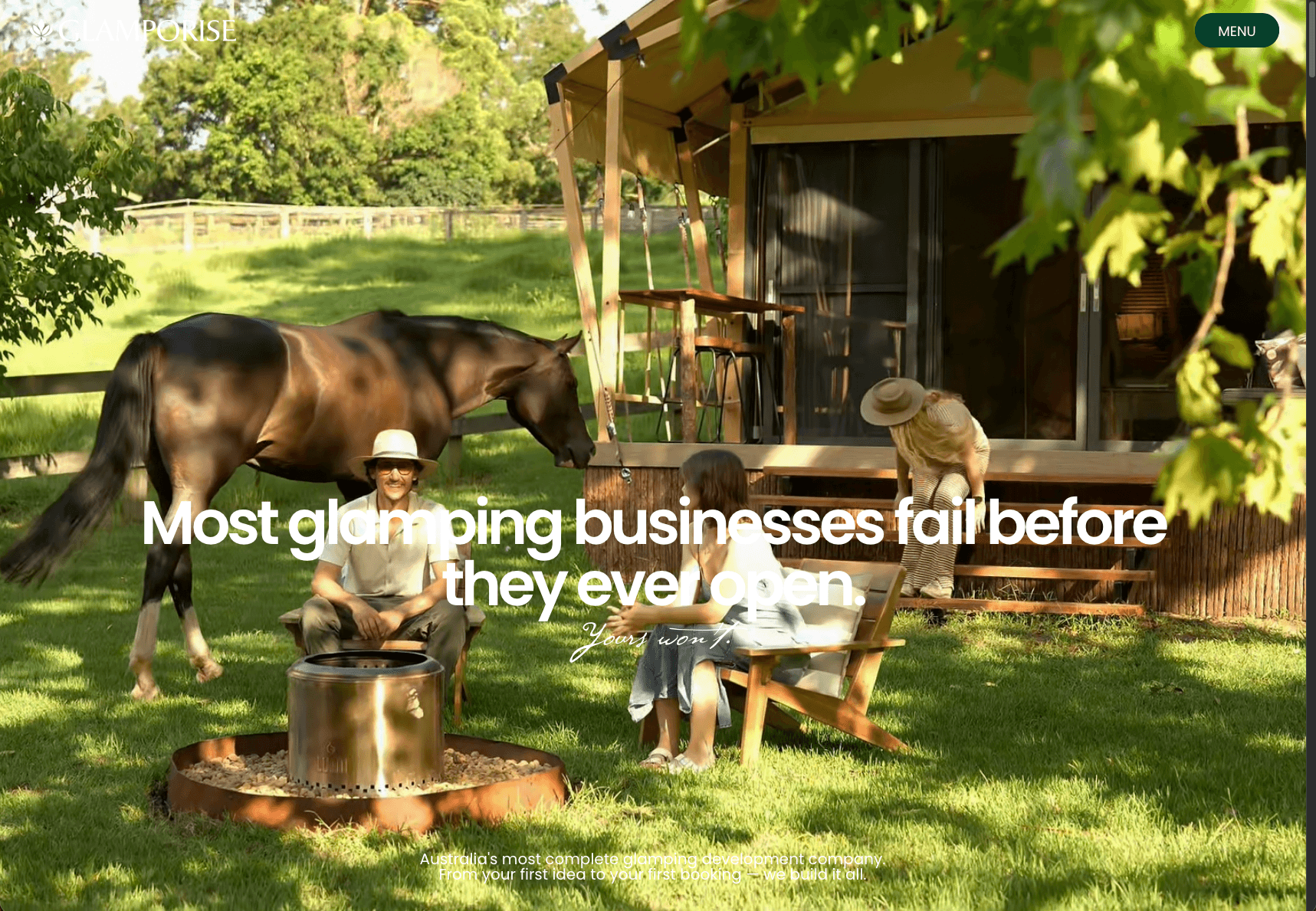
A name, an idea, and nothing else. No positioning, no products, no website, no voice. Here's what got built.
The questions a dome company can't answer
Jesse's main company builds geodesic domes, the round structures you see in glamping resorts. Selling them kept surfacing the same conversation. People didn't just want a dome. They'd say things like "I've got five acres and I want to turn it into a glamping business. Where do I even start?"
That's not a dome question. That's land rules, council permission, business planning, the whole journey. A dome company can sell you the structure. It can't walk you from paddock to resort.
So Glamporise was born to be that guide. When it landed on my desk, "born" was generous. There was a name. That's it.
Fixing marketing for an existing brand is renovation. This was pouring the foundation.
The obvious move, and why we didn't make it
The obvious play was positioning Glamporise as a glamping construction company. Obvious, and fatal. "We build glamping resorts" puts you in a lineup with every builder and shed company that discovered the word glamping last year.
Blue Ocean Strategy has a question I use whenever a market looks crowded: what does this entire industry compete on, and what would happen if we refused to compete on any of it? Everyone in the glamping build space competes on structures, finishes and price. Fighting there means winning on price, which isn't winning.
So I went looking for a spot on the customer's journey that nobody had claimed.
In Australia, before you build anything on your land, the council has to allow it. Getting to yes means a maze of zoning rules and approvals. There's a professional for the drawings, a professional for the certificates, a professional for the plans. Nobody owns the step before all of them: the moment someone with land and a dream needs to know can I actually do this, and what's the path?
Glamporise is the step before everyone else.
Not another builder. The guide who tells you whether the dream survives your local council, then walks with you toward opening day.
Not a product. A machine that makes products.
Here's the part I'm proudest of, and it took the longest to see.
We didn't build one product. We built a repeatable recipe: pick a specific type of customer, decode the exact council maze they face, build them a pathway at every price level.
First two off the line, both for New South Wales:
The Tiny Home pathway. For people who want a tiny home on their land. Its own story here →
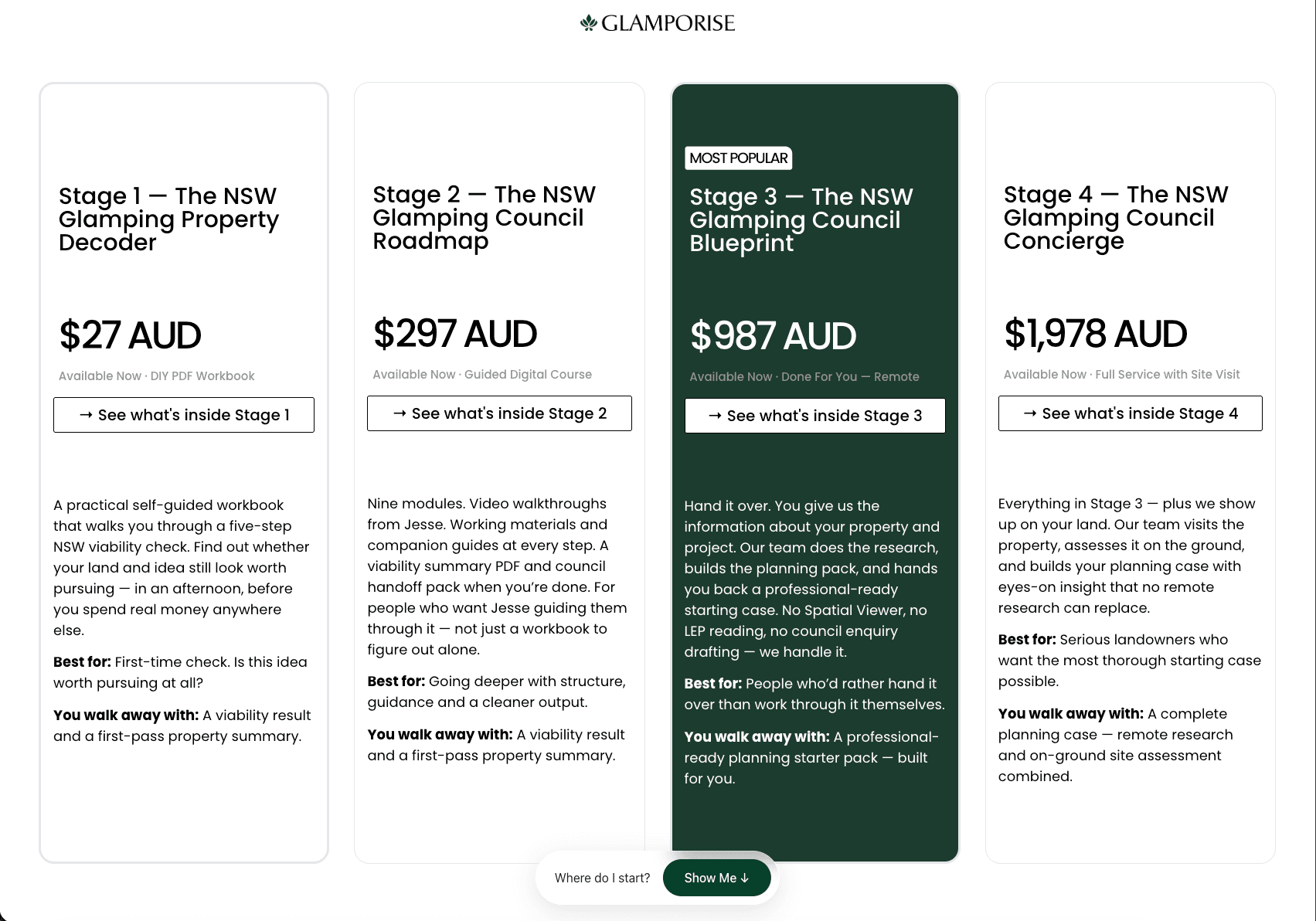
The Glamping pathway. For people turning land into a glamping business. Four stages, $27 to $1,978. A starter guide that decodes what your land allows, a course teaching the whole council journey, a done-for-you option, and a top tier where we guide everything including standing on your actual land with you.
One mechanism makes the ladder climbable. Whatever you paid at one stage credits toward the next. That's straight out of $100M Money Models: the entry product isn't there to make money, it's there to buy a customer. Credit the earlier purchase and the $27 buyer stops being a cheap lead. They're a top-tier client who hasn't finished climbing.
Because it's a recipe, the next versions are already obvious. Pathways for winery owners. For farmers. For retiring landowners who want the land to earn. Each one directly targeted, because each faces a different maze. Then other structures. Then other states.
Everything a real brand needs to exist
- The complete website, every page written word for word. Twice, once the positioning sharpened.
- Sales pages and video scripts for the pathway products
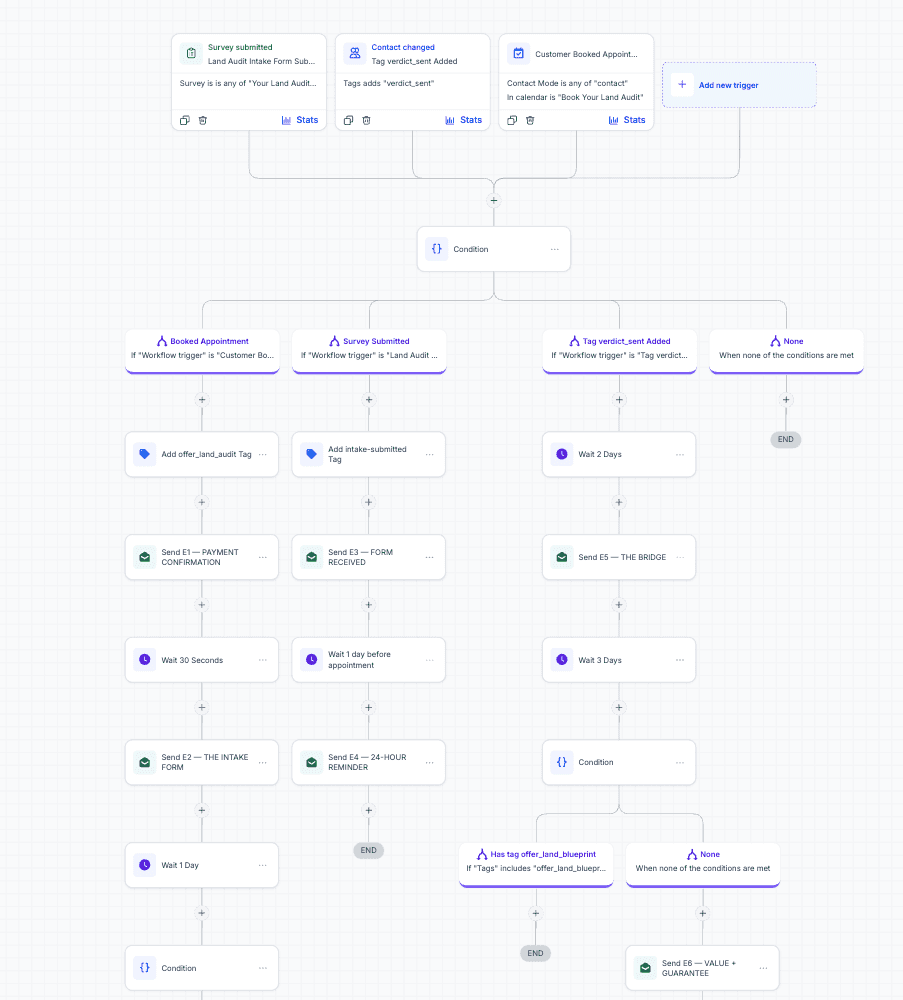
- Automated email systems: welcome, follow-up, and post-purchase onboarding, all running on their own
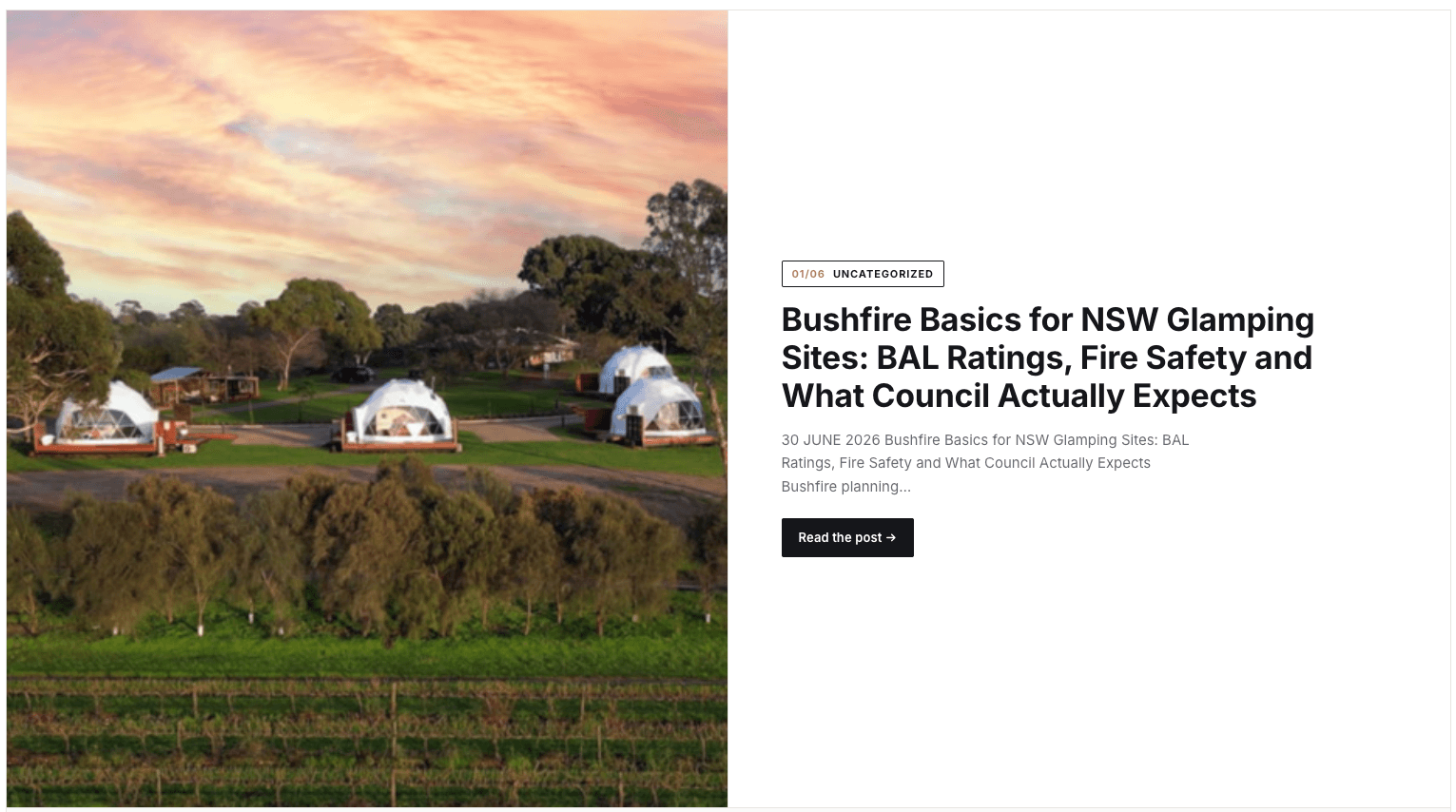
- 8 blog articles written to bring in search traffic
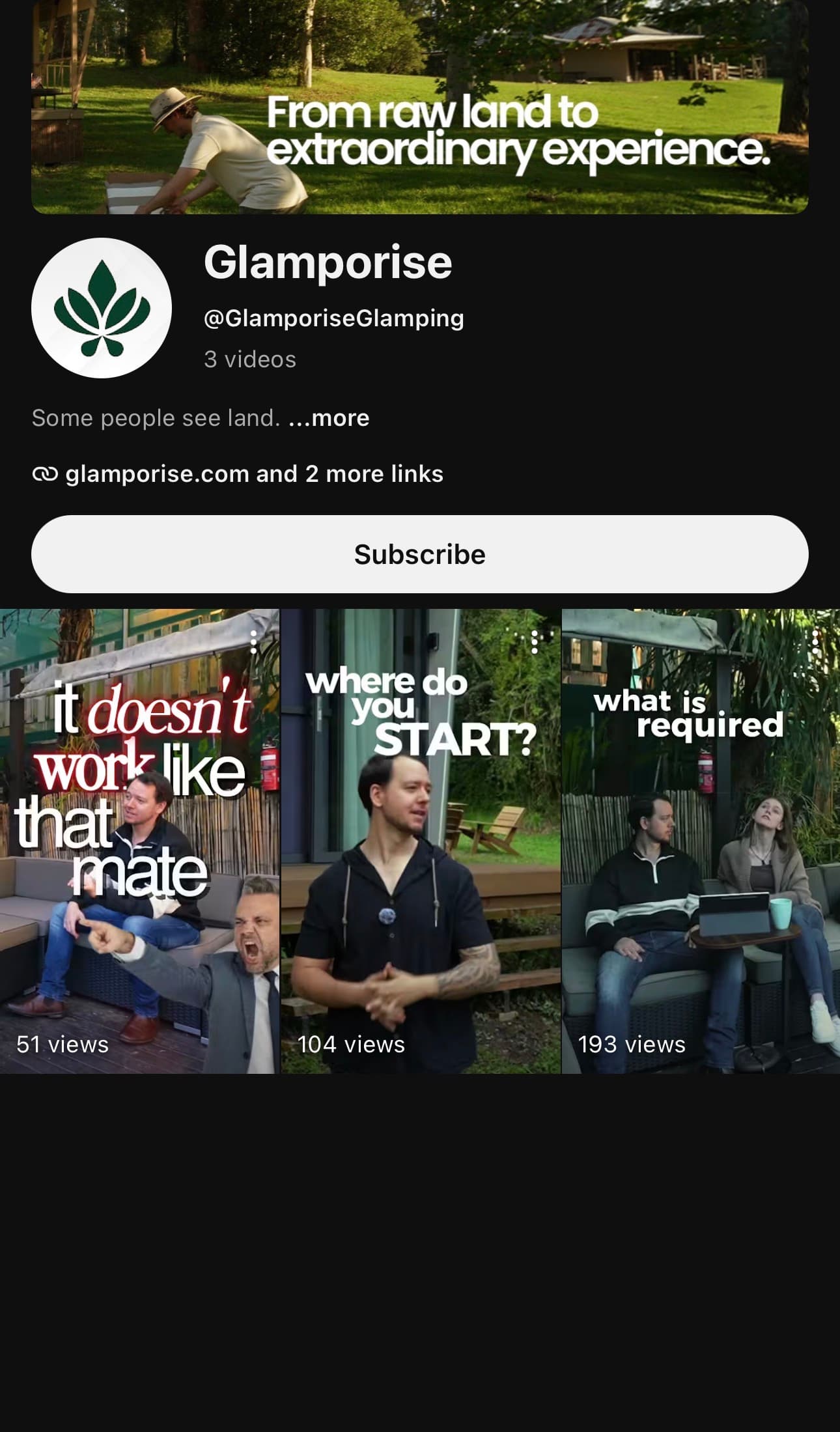
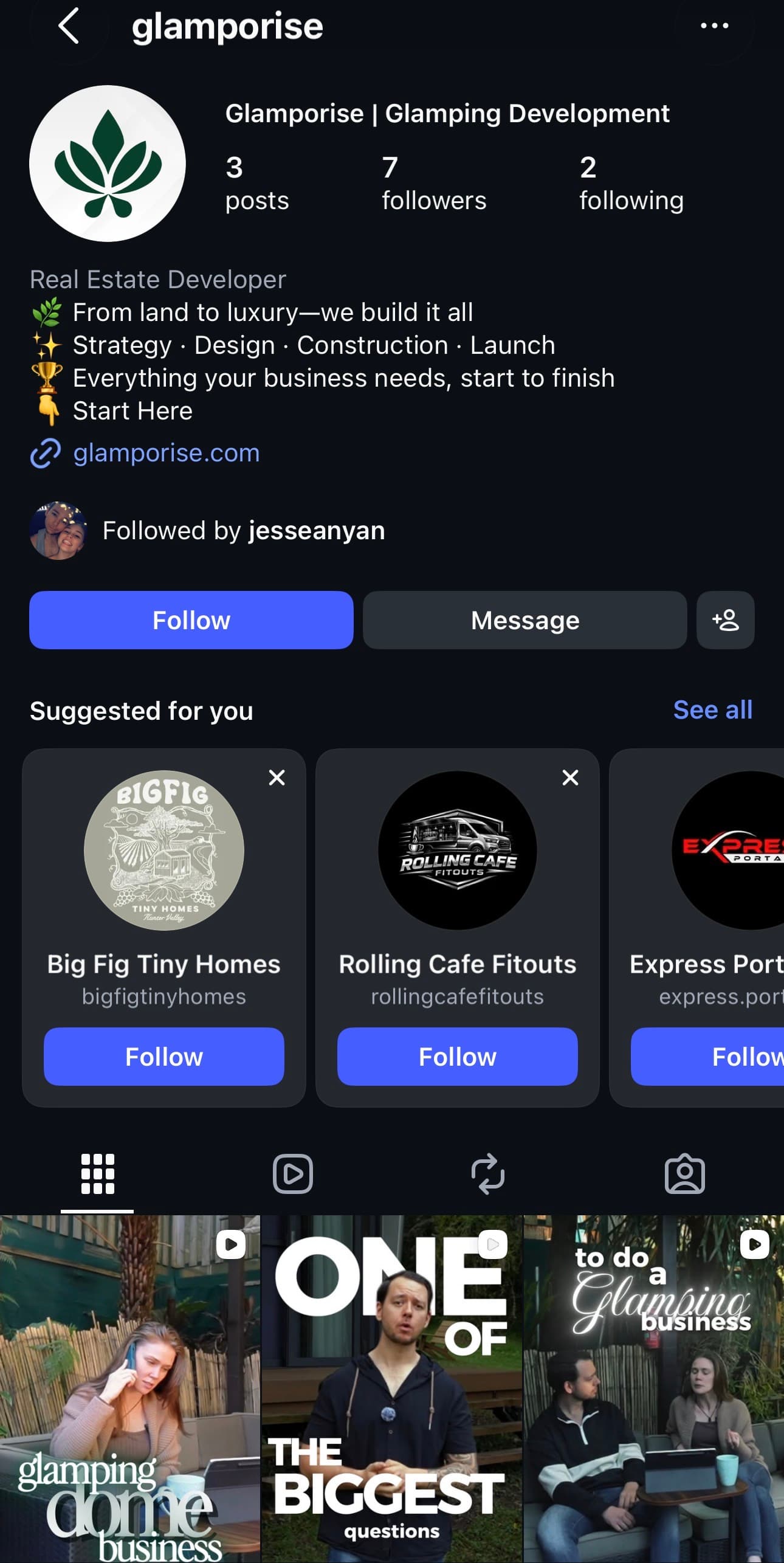
- Profiles and bios across Instagram, Facebook, YouTube, LinkedIn and Pinterest, plus caption workflows for the brand's first content push
Where it stands
Glamporise exists the way a real brand exists. A position nobody else occupies, products that fund a customer's climb, a website that says one clear thing, six platforms wearing the same voice. The first content wave is rolling out now.
A brand isn't a logo with captions. It's an argument about where you sit in the customer's journey and why nobody else sits there. Everything here is that one argument, repeated everywhere a customer might meet it.
“Fixing marketing for an existing brand is renovation. This was pouring the foundation.
“What does this entire industry compete on, and what if we refused to compete on any of it?
“The $27 buyer isn't a cheap lead. They're a top-tier client who hasn't finished climbing.
“A brand isn't a logo with captions. It's an argument.
This project ran on
More stories like this one, or something specific on your mind?