
Case Study — Independent creators, Philippines
Same guy. Same camera. 97 views, then 438,000.
Two creators asked me why their content wasn't landing. I studied what actually makes videos travel, built a framework from it, and pointed it at their accounts.


The question nobody could answer for them
Two mates, same problem, completely different worlds. One posts about fish. Flowerhorn keeping, aquariums, the local fishkeeping scene. The other posts about dropshipping and online business.
Both were doing what the advice says. Posting consistently. Decent editing. Trending sounds. Both stuck at a few hundred views with no idea why one video beat another.
"Post more, be consistent" is what you tell someone when you don't actually know why things work.
I didn't know either. So I went and found out.
Reverse-engineering why videos travel
I spent weeks pulling apart videos that had gone genuinely viral across unrelated niches. Not to copy them. To find what they shared underneath. Then I went past the marketing advice into the psychology research on why people can't stop watching things.
Three ideas explained most of it.
Curiosity is physically uncomfortable. The research on information gaps shows that a specific, incomplete piece of knowledge feels less like interest and more like an itch. Vague mystery does nothing. Specific incompleteness, where the viewer feels they almost know, is what holds a thumb still.
Suspense beats surprise. Hitchcock's bomb. If it goes off with no warning you get two seconds of shock. If the audience knows it's under the table, every second before becomes unbearable. Most creators hide their payoff. Better move is showing the stakes early, then making people watch it arrive.
Unfinished business sticks. Open a loop and the brain holds it. Close it too early and the brain files it away, then scrolls.
The framework
Two parts. The structure is the simple half.
Hook, substance, payoff. First seconds open a specific curiosity gap, visually and verbally. The middle 80% delivers actual value with no dead air. The last few seconds close the loop, then stop immediately.
The second half is the one that matters.
The Ceiling Rule. Every idea has a maximum audience baked into it before you film a frame. Make a video about flowerhorn breeding technique and your ceiling is people who breed flowerhorns. Make one about dropshipping mechanics and your ceiling is people already dropshipping. You can execute perfectly and still be capped.
So the niche stops being the story and becomes the vehicle. The story has to be something a stranger with zero interest in your topic still feels. Money. Ambition. Disbelief. Wait, people actually live like this? Then the fish, or the business, is just how that feeling gets delivered.
Break the niche barrier and the ceiling disappears.
Creator one: the clean experiment
The dropshipping account. One person, one niche, one face. The only variable that changed was how the content got built.
Before: 97 views. 199. 700. 1,400.
After: 67,000. Then 438,000.
One detail matters more than the spike: 31% of the traffic came from search. People typing "dropshipping for beginners", "how to start dropship just organic". Content built this way doesn't spike and die. It keeps getting found.
He's since stopped posting to focus on other work, which makes the data cleaner. Results arrived when the system was applied and stopped when the posting stopped.
Creator two: reach without an audience
The fishkeeping account. No before-and-after here, because the framework ran from the start. What it proves is different.
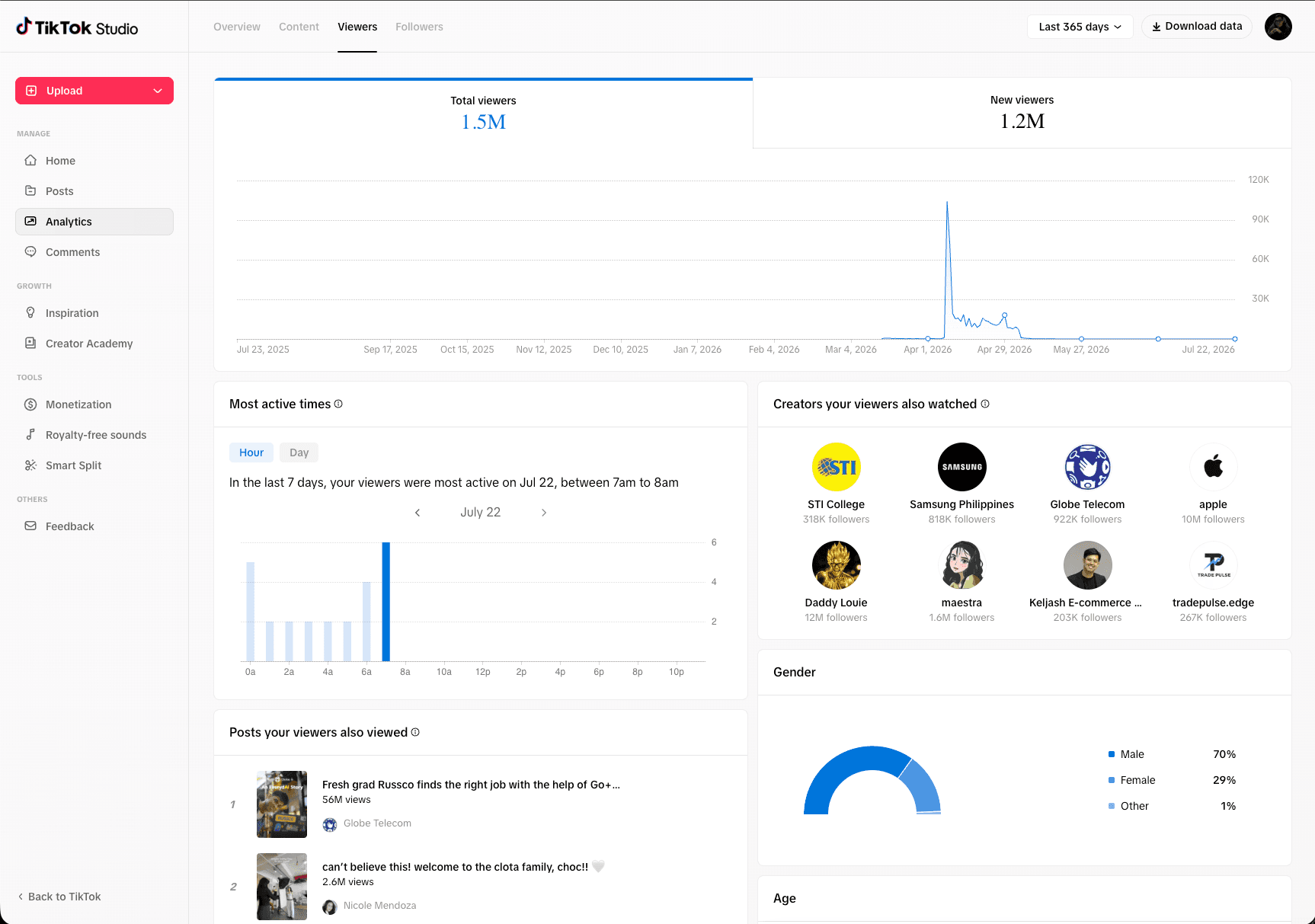
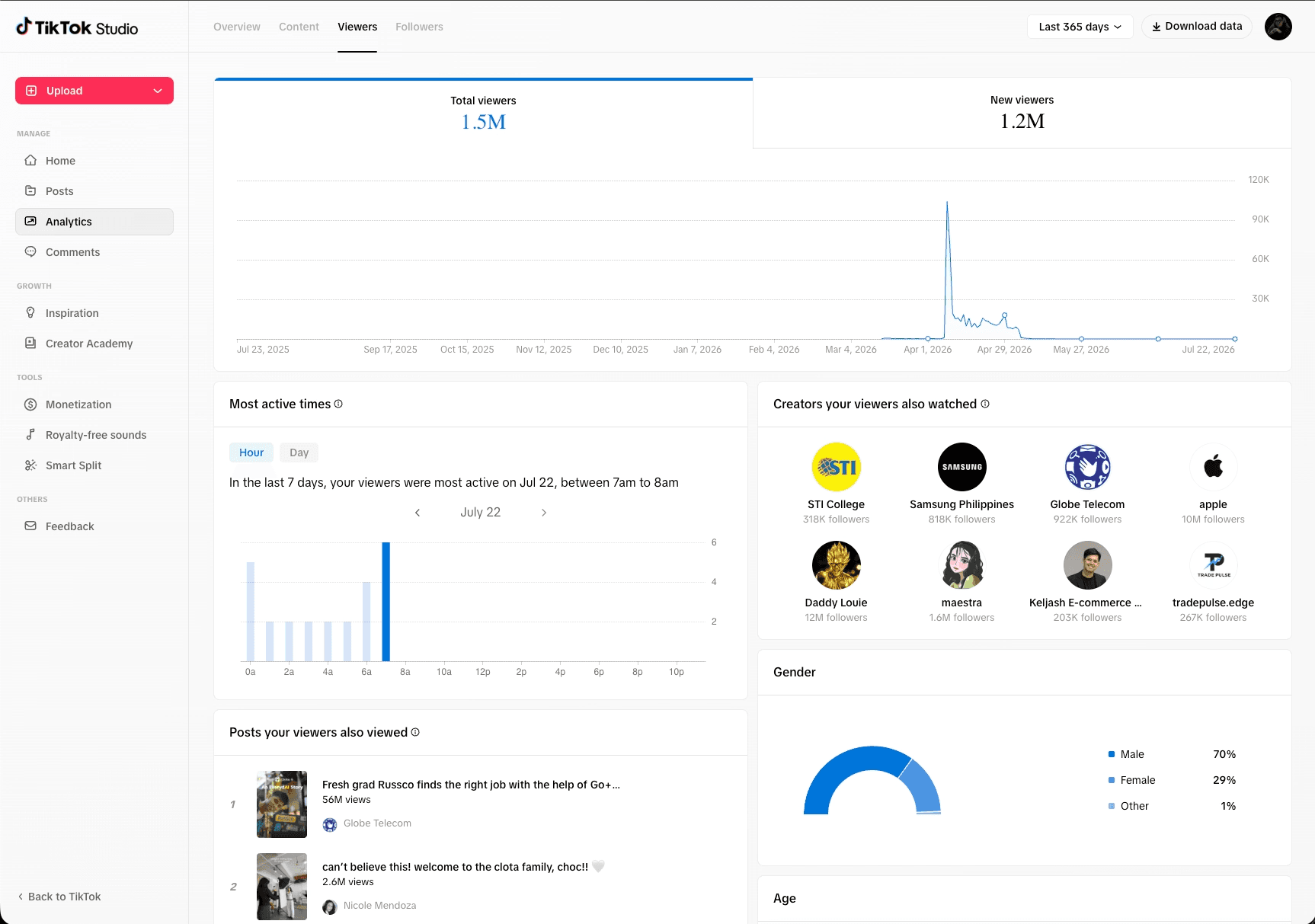
TikTok, twelve months: 3.2 million video views. 3.7 million viewers, 2.5 million new. 73,000 likes. From an account with 11,000 followers.
Read those two numbers together. 3.2 million views from an audience of eleven thousand. That's content winning in the algorithm over and over, not being served to an existing fanbase.
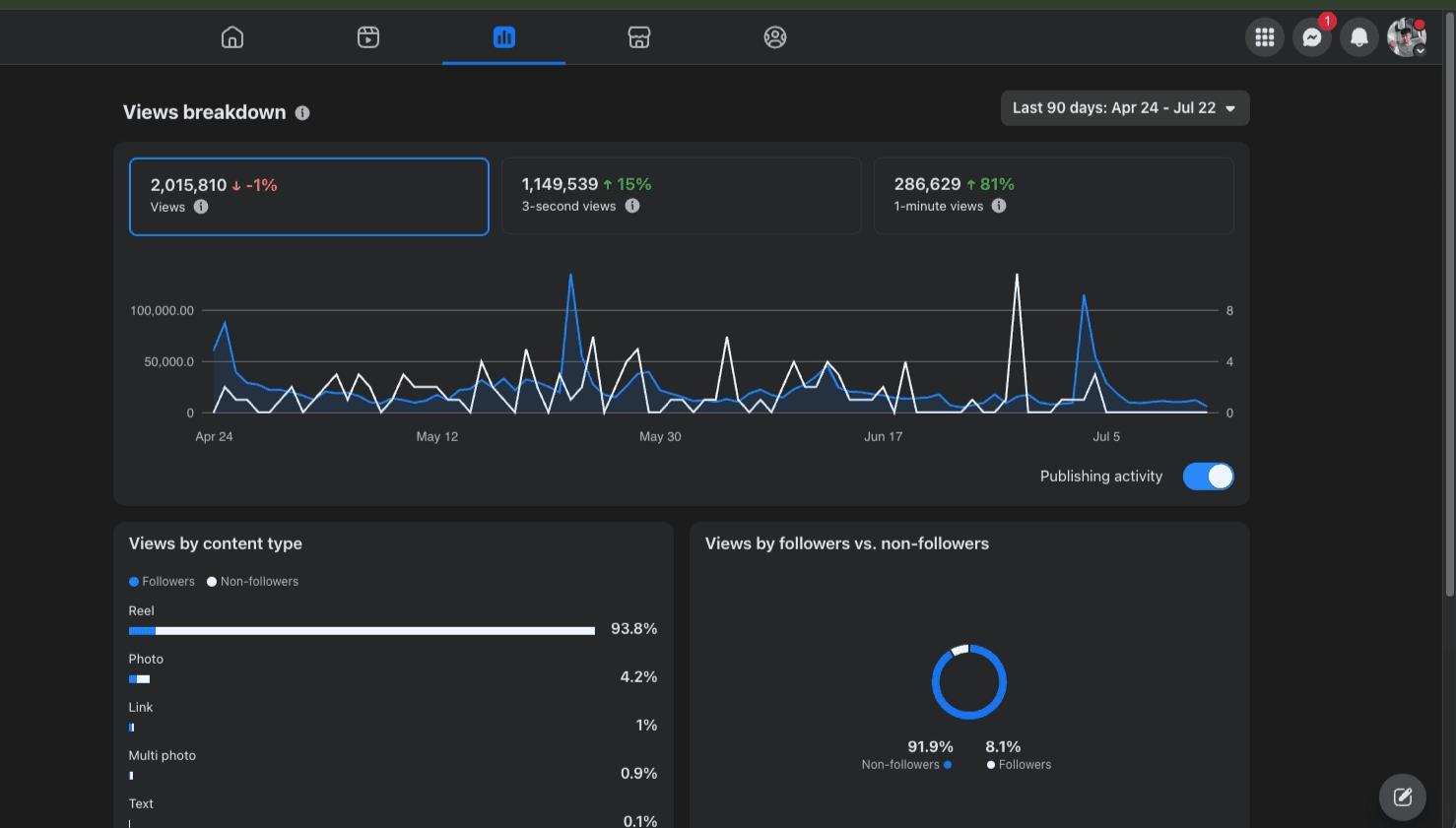
Facebook says it louder. In 90 days: 2 million views, 76,500 engagements, followers up 100.8%. Top posts at 836,000, 503,000, 425,000, 357,000. And 91.9% of all views came from people who don't follow the account.
One more, quietly the most telling. Over that period total views held flat while one-minute views rose 81%. People weren't just clicking, they were staying almost twice as often. Raw views can be luck. Watch time is craft.
Where it stands
Two accounts, two industries with nothing in common, one framework. Millions of views on both, from audiences that barely existed.
Most content doesn't fail in the edit. It fails at the idea. By the time you're picking a hook or a caption, the ceiling's already set.
The fish were never the story. The fish were the vehicle.
“Post more and be consistent is what you tell someone when you don't know why things work.
“Every idea has a maximum audience baked into it before you film a frame.
“Raw views can be luck. Watch time is craft.
“The fish were never the story. The fish were the vehicle.
This project ran on
More stories like this one, or something specific on your mind?