
Case Study — Sierra Pacific Insurance Services, California
The starting gun
The market shifted overnight. The campaign had to be fast, aimed at two very different audiences, and careful enough that every sentence could survive a lawyer reading it.

When the market moves, somebody gets to deliver the news
Sierra Pacific is a California brokerage that insures tow truck companies. Tough, regulated, relationship-driven. I run their marketing systems from the other side of the planet.
Then two things happened at once. One of the biggest insurers in America came back to a market it had abandoned, right as another provider quit it. Overnight, thousands of tow businesses across California needed somewhere new to get covered, with better options than they'd had in years.
For most people that's industry news. For a brokerage it's a starting gun. Every tow operator in the state was about to hear about this from somebody. The only question was who.
Two audiences, one event, zero mixing
Speed was the obvious requirement. The strategic work was two decisions.
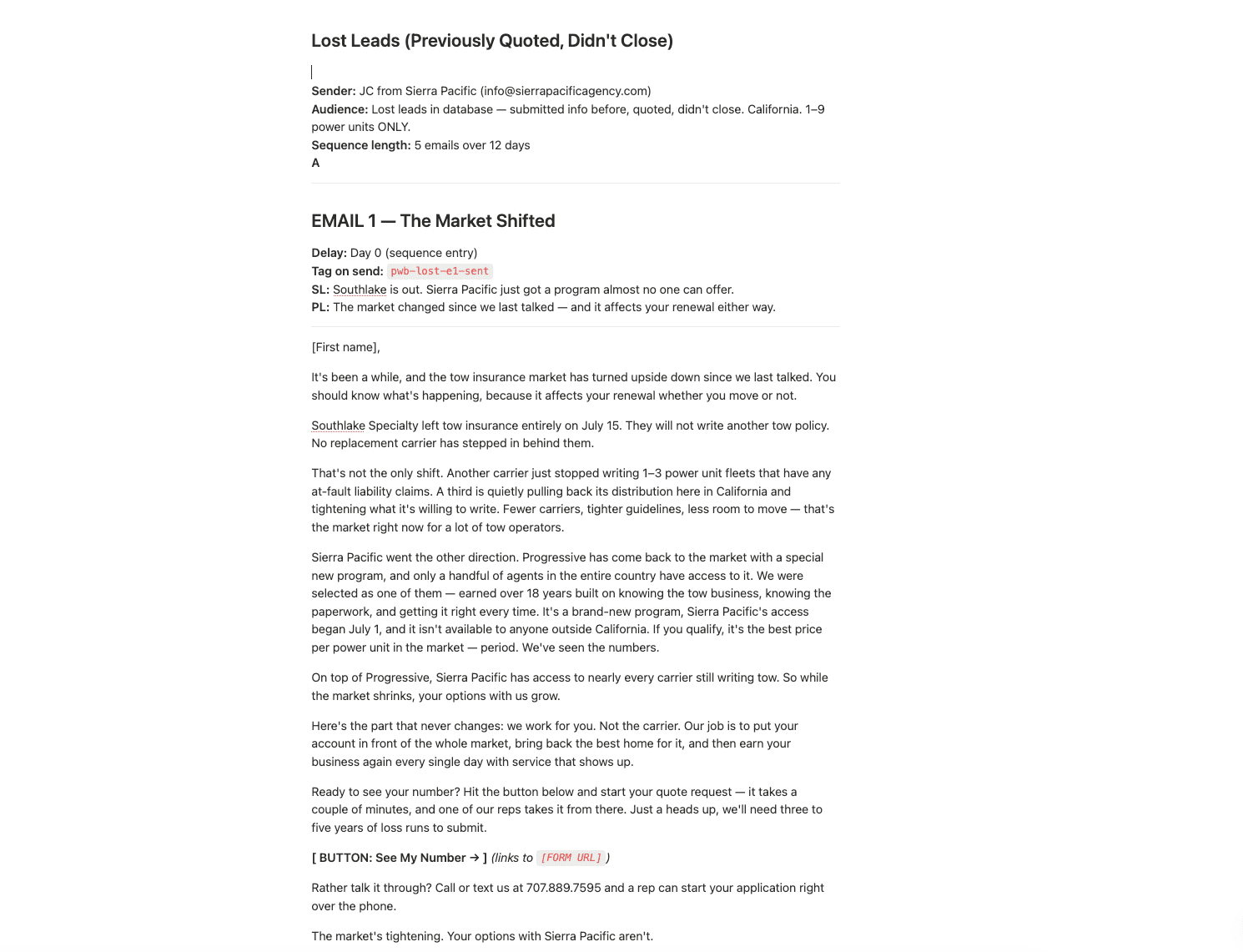
One: this was two campaigns wearing the same event. A business that quoted with Sierra before and went elsewhere hears "the big player is back" completely differently to a stranger who's never spoken to the brokerage. The first group needs a door reopened without awkwardness: things have changed since we last talked, worth another look. The second needs the news itself, with Sierra as the one delivering it.
Same event, two psychologies. Two separate campaigns, each with its own arc and follow-ups. Blending them would have wasted the moment on both.
Two: in insurance, what you don't say is the copy. This industry punishes loose promises legally, not just reputationally. So before writing a single subject line, we wrote the rules.
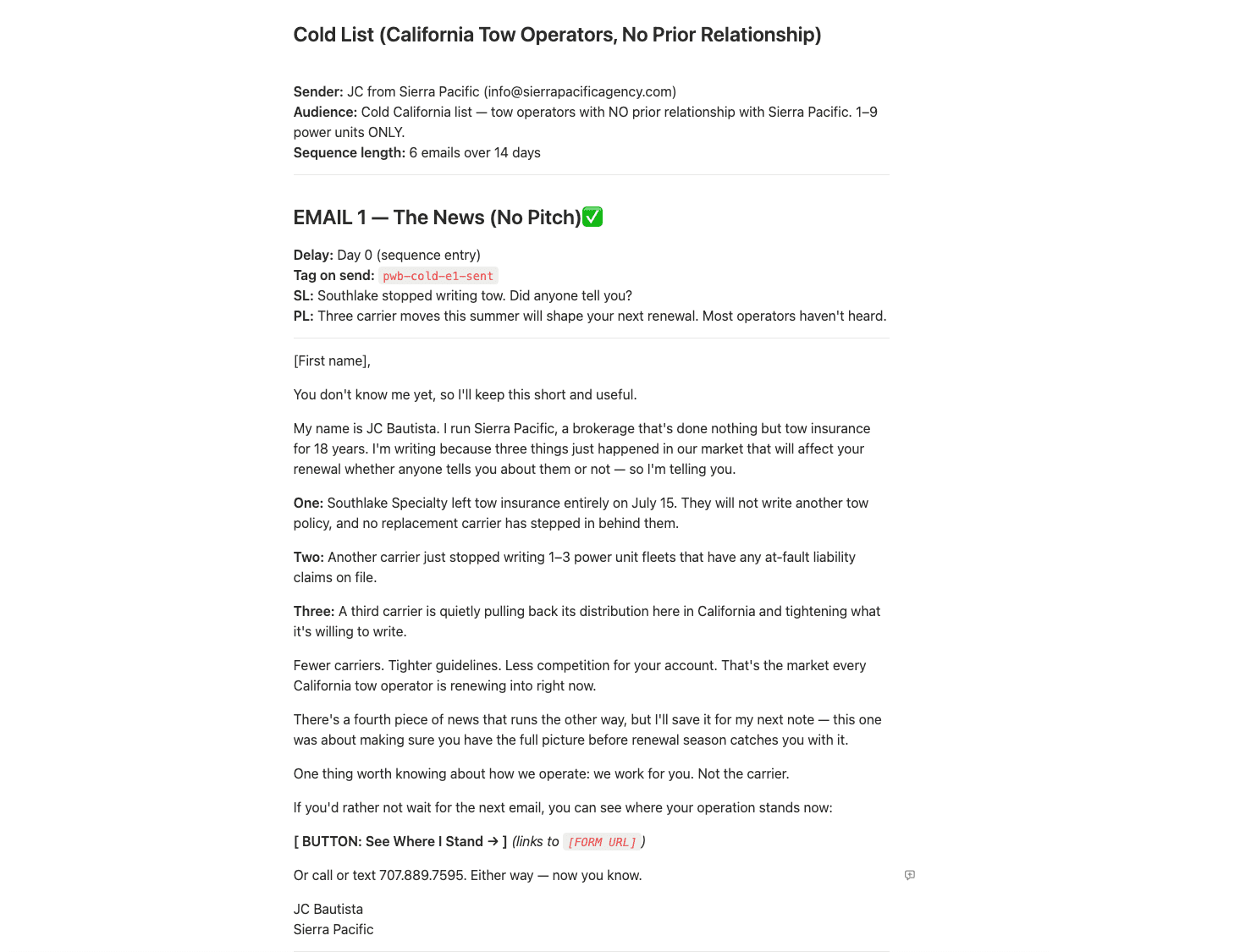
The struggling provider gets described, never named. I still won't name them here. That was the rule, and rules don't expire when the campaign ends.
Access framed honestly: only a handful of agents could offer this, which was simply true. Cialdini's work on scarcity is the most abused idea in marketing, and the abuse is what kills it. Fake countdown timers train an audience to ignore you. Real scarcity, stated plainly, does the opposite.
Every benefit carried the words if you qualify, because promising an outcome the insurer decides isn't punchy copywriting. It's a lawsuit invitation.
Rules like these don't weaken copy. Copy that survives a compliance officer's red pen is copy the reader trusts more. Restraint reads as credibility.
What got built
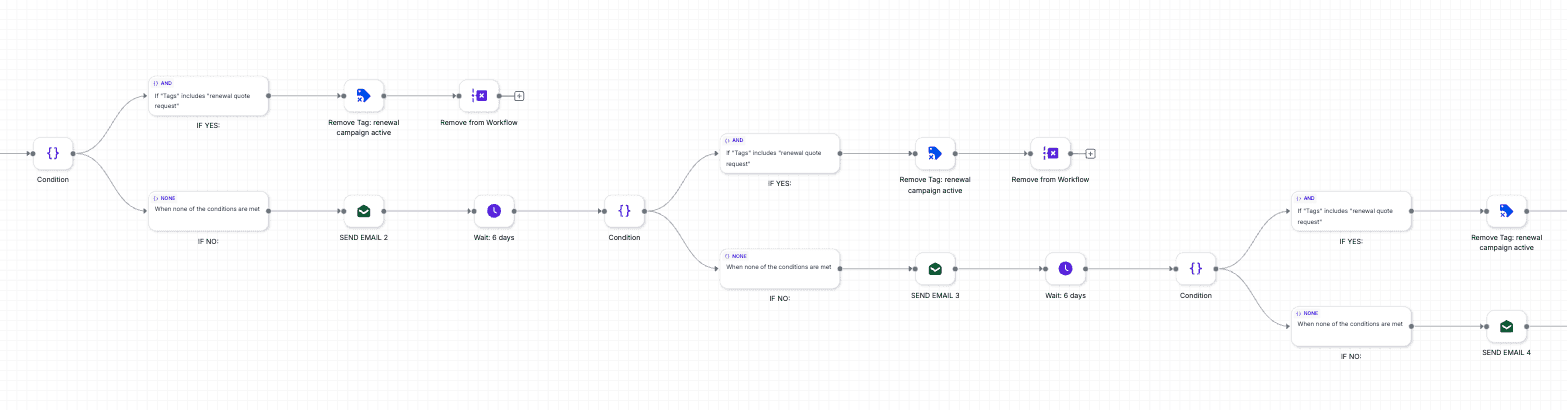
- Two complete email campaigns, one reopening doors with past leads, one introducing the news to cold California businesses, each with its own sequence of follow-ups
- Two versions of every subject line, tested against each other
- The tagging system behind it, routing every reply, click and quote request into the right follow-up path
- The written rulebook itself, so every Sierra campaign since inherits the same discipline without relearning it
Where it stands
The campaign shipped while the news was still news. It left behind something more useful than any single send: a way of working. That engagement grew into lead scoring systems, dashboard rebuilds, event campaigns and fleet-specific launches, but this is where the rhythm got set. The market moves, we move, and every sentence survives scrutiny.
Constraints are a copywriter's best friend. The rules didn't limit this campaign. They're the reason it could run at all.
“For most people that's industry news. For a brokerage it's a starting gun.
“In insurance, what you don't say is the copy.
“Fake countdown timers train an audience to ignore you.
“Restraint reads as credibility.
This project ran on
More stories like this one, or something specific on your mind?