
Case Study — Kingdomes, Australia
Nineteen people walked in. The machine knew who was ready.
When your product costs five figures, you can't treat every curious visitor the same. So I built something that sorts them. Automatically, politely, and profitably.
The expensive problem nobody mentions
Kingdomes sells geodesic domes starting at five figures. High-ticket businesses all share the same quiet problem: most people who raise their hand aren't ready to buy. Some are dreaming. Some are researching for a someday that's three years out. A few are genuinely ready now.
Treat them all the same and you lose twice. The sales team burns hours on lovely chats with people who were never buying, and the ones who are ready wait in the same queue as the dreamers.
The usual fix is making it harder to get in touch. Fewer forms, more friction, qualify at the door. That works, and it also turns away next year's buyers.
Better fix: let everyone in, and build something that sorts them.
Chapter one: the masterclass
The front door was a free online masterclass. A real one, not a sales pitch in a hat.
I rebuilt Jesse's talk track across several versions. Dry humour, questions that keep a virtual room awake, actual customer stories, and the two things that matter most when someone's about to spend five figures: a 36-month build guarantee, and an option to sleep in a dome at a partner resort before buying one.
Around it, 20 emails doing the inviting, reminding and warming, so the founder's only job was to show up and teach.
The sorting brain
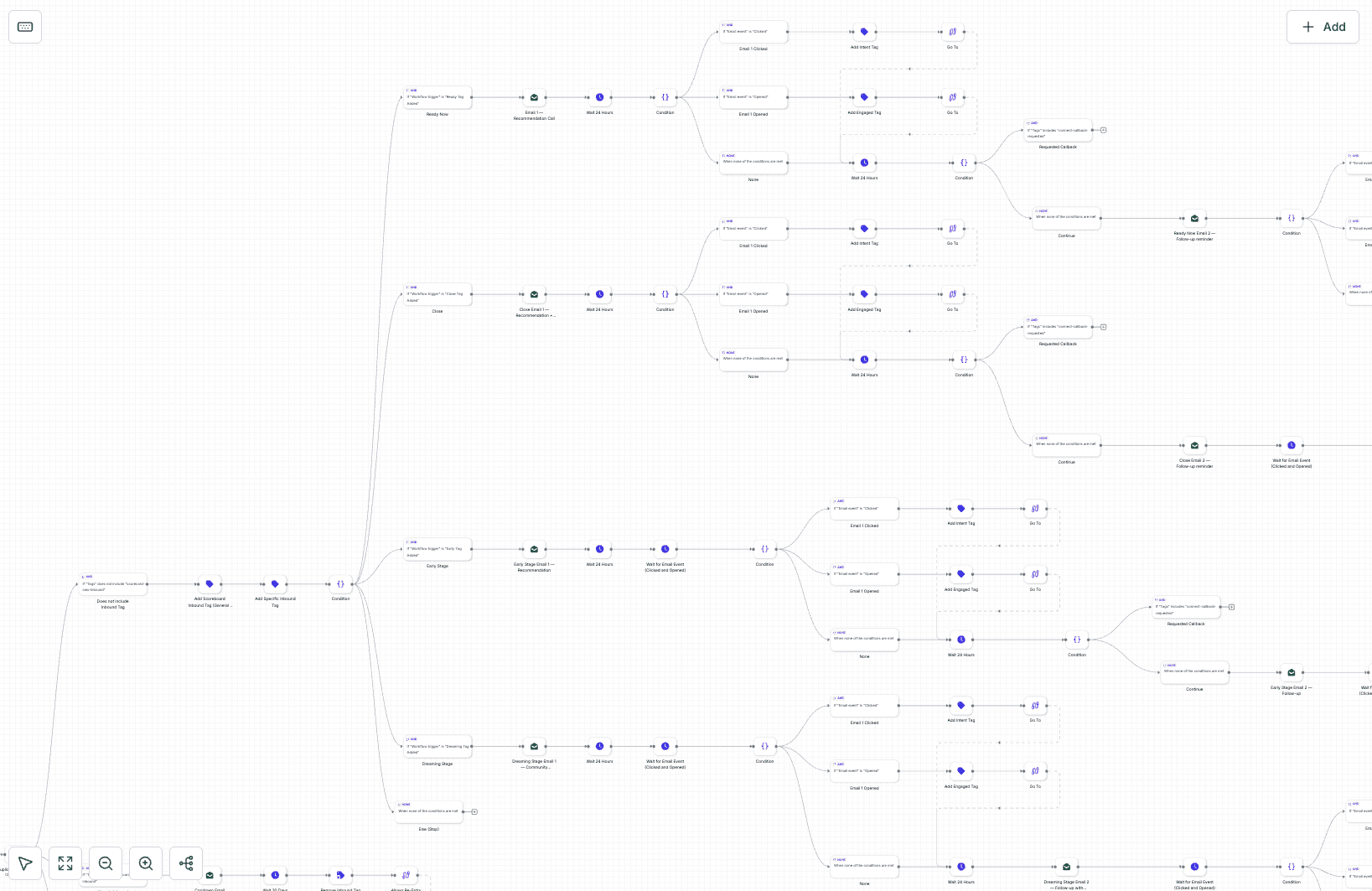
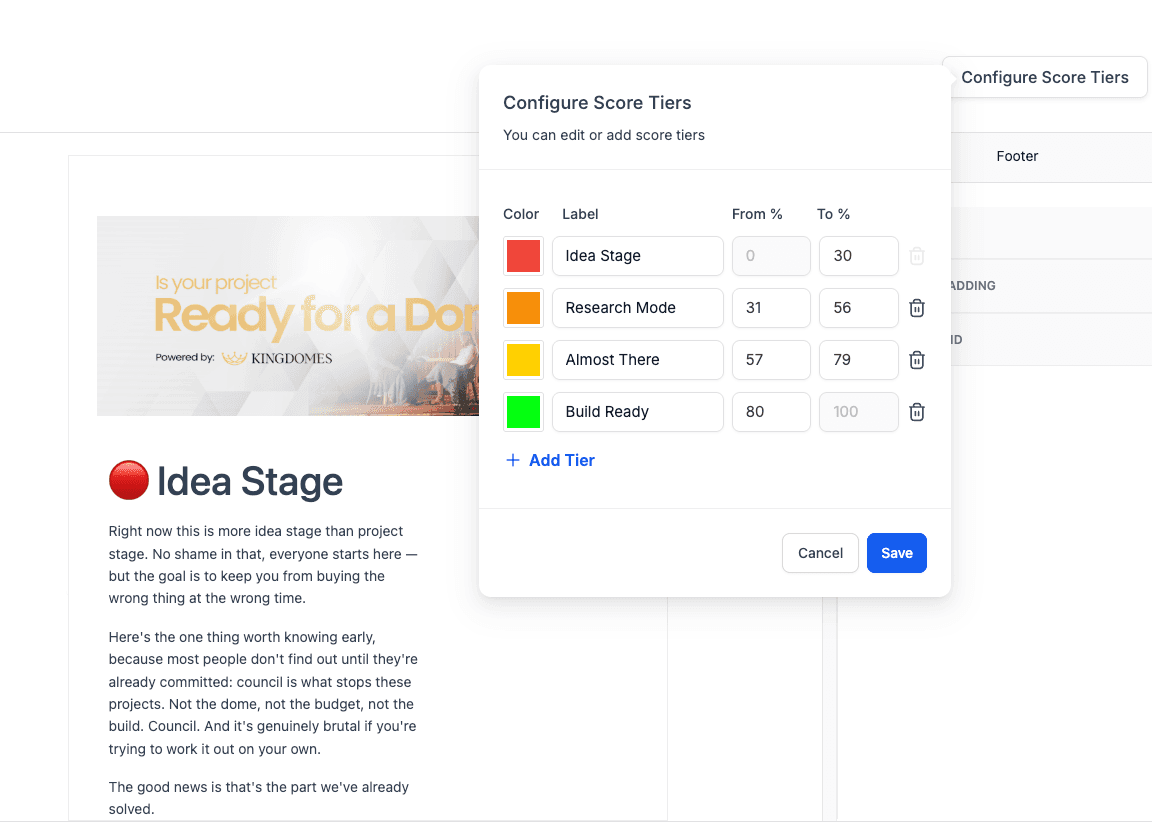
During and after the class, attendees answered a short scorecard. Land, budget, timeline. Two minutes, no interrogation.
Behind those questions sat a scoring system that put every person into one of three lanes:
Ready now. Straight to a founding offer, while the excitement was still warm.
Close, but not quite. Invited to a one-on-one consult with a discount code as the nudge, plus its own short email sequence doing the chasing.
Someday, maybe. No pressure, no pestering. A long stream of genuinely useful emails, staying helpful until their someday arrives.
Three kinds of people, three different experiences, nobody sorting anything by hand. And the system breathes: go quiet long enough and it steps you down a lane instead of nagging you forever.
Why a scorecard and not a form
Cialdini's Influence has a principle that runs through this whole build: people act consistently with commitments they've already made. Small yes, then a bigger one.
A contact form asks for a commitment and gives nothing back. A scorecard asks four easy questions and hands you an answer about your own situation. The person gets something useful. We get a qualified lead. And the act of answering makes the next step feel like continuing rather than starting.
Hormozi's $100M Leads pushes the same idea from the other end: an unengaged lead isn't a lead, it's a name. The scorecard is what turns names into leads, before anyone on the sales team spends an hour finding out the hard way.
Sorting people isn't gatekeeping. Done right it's good manners at scale.
The scoreboard
The masterclass ran. Nineteen people attended. One became a buyer.
If that sounds small, you're thinking in low-ticket. One close from a nineteen-person free event, in a business where a sale runs five figures, pays for the experiment several times over. And the machine knew which of the nineteen deserved the sales team's time.
Where it stands, and why it keeps changing
This is the part I like telling, because it's what actually happens to systems.
The scorecard proved so useful it got promoted. It's now wired into the main contact flow on the website, so every enquiry gets sorted whether there's a masterclass or not, with AI chatbot integration next.
The masterclass itself is resting. Kingdomes' sister brand built starter products that handle the early-education job — that story here → — so the machine now routes not-ready-yet visitors toward those instead of into a holding pattern. When masterclasses come back, and the plan is to run them for the sister brand next, the whole engine switches on with everything already built.
Campaigns end. Systems get repurposed.
“Most people who raise their hand aren't ready to buy.
“Sorting people isn't gatekeeping. Done right it's good manners at scale.
“An unengaged lead isn't a lead. It's a name.
“Campaigns end. Systems get repurposed.
This project ran on
More stories like this one, or something specific on your mind?