
Case Study — Sierra Pacific Insurance Services, California
Our customers hated our industry. So we stopped selling to them.
New marketer, a plan nobody was running, and an audience with a grudge. I built the strategy I could actually control. The year we lost our biggest carrier turned out to be the best year on the books.
Walking into a room that doesn't want you
I joined Sierra Pacific in November 2024. California brokerage, selling insurance to tow truck operators. Two problems on day one.
First: tow operators do not like insurance companies. Premiums climb every year, claims are a fight, and to a bloke running a few trucks insurance feels like a bill that punishes him for existing. Advertising at that audience is shouting a sales pitch into a room full of people who came to complain about you.
Second problem was internal, and I'll be honest about it. The founder is the face of the brand, and the content plans I built weren't getting run. That happens. You can spend a year sulking about the thing you can't control, or go win with the part you can.
I went looking for the part I could.
Stop selling. Start helping.
Here's what I noticed. Tow operators didn't hate insurance information. They hated being sold to. In their online communities they were constantly asking each other real questions. What coverage do I need for this. Who's writing policies for that. Why did my premium jump.
Those questions were being answered by other tow guys guessing. There was a gap where an expert should be.
Carnegie's whole book is one idea wearing different hats: become genuinely interested in other people, and talk in terms of their interests, not yours. Most marketing does the opposite. It arrives loud, talks about itself, and asks for something.
So the strategy stopped being "how do we advertise to people who hate us" and became: be the most useful person in the room, under our own name, and let people work out who to call.
Reciprocity does the rest. Give something real with nothing attached and people remember who gave it.
Two lanes, both hand-built
Online. Towing has huge active communities where operators actually talk. We showed up as ourselves. Joining discussions, posting useful insurance information, answering the coverage questions people were already asking out loud. No campaigns, no ad spend. Participation.
Follower counts stayed unimpressive. Never bothered me. We weren't building an audience, we were being present at the exact moment somebody needed an answer.
Offline. The brokers were meeting tow operators face to face every week with nothing to hand them. So I built a menu-style print piece. A clear layout of what Sierra could actually do for an operator, designed to be handed over in person and left behind.
Digital where the conversations happened, print where the handshakes happened. Nothing clever. Just covering the whole territory.
Then the floor fell out
Halfway through, the thing every broker dreads. Our primary carrier exited the towing market. Not a supplier. The supplier. The lifeline.
In this industry, losing your main carrier is usually the start of a bad year. Sometimes a fatal one.
That's the context for what happened next.
The numbers
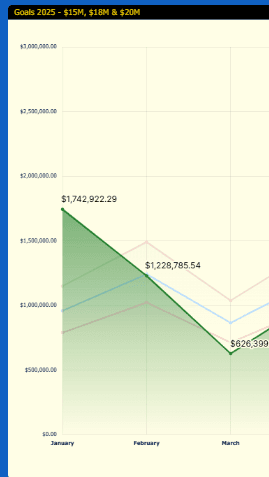
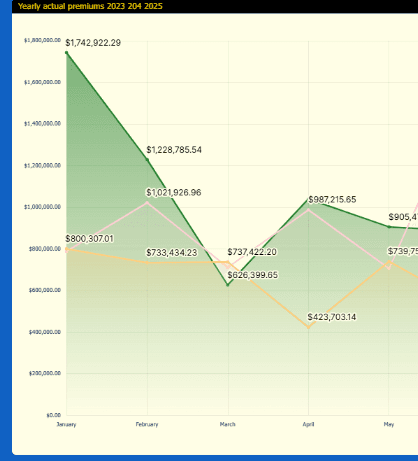
January 2025: $1,742,922 in premiums. Against roughly $800,307 in the same month two years earlier. More than double.
February 2025: $1,228,785. April 2025: $987,215.
Across the year, 2025 sat above both prior years in most months, while the business absorbed the loss of its most important carrier.
Now the honest part. There was no attribution system at the time. No tracking that could prove a group comment became a policy. I won't pretend otherwise, and you should be suspicious of anyone who does.
What I can tell you is what the company concluded. Leadership attributed the growth to the marketing effort, and the team was rewarded for it. When the people whose money is on the line reach that conclusion independently, that's the strongest proof available in a business without tracking. It's also more honest than a number I invented.
Where it stands
The approach became how Sierra markets. That first year grew into everything since: campaign systems, lead scoring, automated follow-up, the infrastructure that means the next result will actually be trackable. See the campaign work →
Nobody hired me to complain about not being listened to. The ground game happened because it was the lane genuinely open to me, and it turned out to be the right lane anyway.
You can't out-advertise a grudge. You can only out-help it.
“Advertising at that audience is shouting a sales pitch into a room full of people who came to complain about you.
“We weren't building an audience. We were being present at the exact moment somebody needed an answer.
“Nobody hired me to complain about not being listened to.
“You can't out-advertise a grudge. You can only out-help it.
This project ran on
More stories like this one, or something specific on your mind?